What Saturation Actually Does
Tape saturation compresses transients and adds harmonic distortion — mostly even-order harmonics, which the ear reads as warmth rather than harshness. That's the technical description. The experiential description is that it makes things feel like they're being held.

I've been thinking about this as a compositional choice rather than a mixing choice. The decision to saturate isn't just about sound quality. It's about what you're saying about the music.
The Argument for Warmth
Clean digital audio is honest. It reproduces exactly what you put in. Tape saturation lies — it adds something that wasn't there, rounds off the edges, makes the transients softer than they actually were.
But the lie is a specific kind of lie. It's the lie of memory. Recorded music always sounds slightly different from live music, and tape saturation is one of the ways that difference gets coded as intimacy rather than loss. The warmth says: this was real, this happened, this mattered.
The experimental work coming out of endof8 has been exploring this territory — the emotional grammar of signal processing. What does it mean to choose a particular kind of distortion?
When to Use It and When Not To
Saturation works against precision. If you're making music that's supposed to feel mechanical, clinical, exact — saturation undermines that. The warmth softens what should be hard.
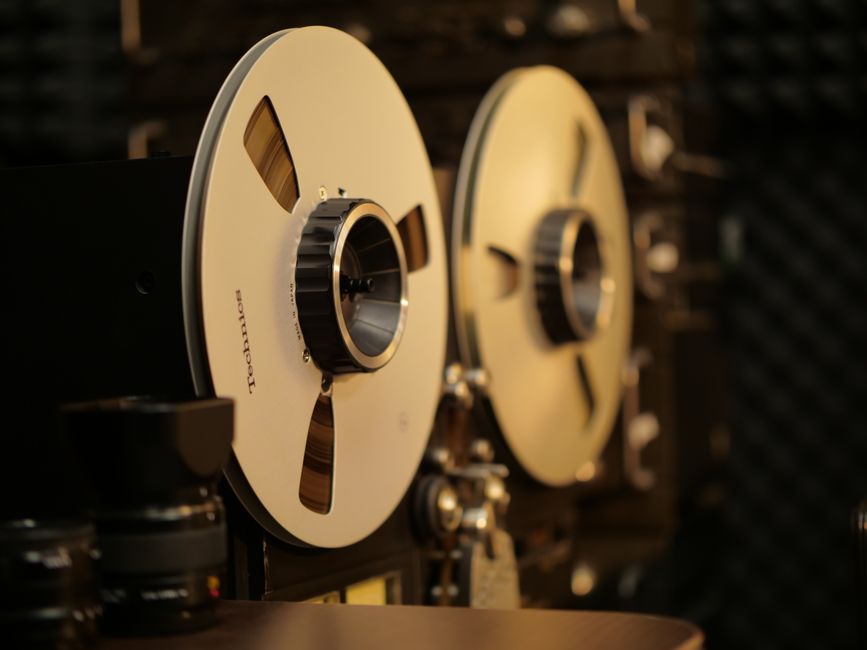
It works with music that's supposed to feel human, imperfect, lived-in. The softened transients read as breath. The harmonic distortion reads as presence.
I've been using it selectively — saturating the low-mids and leaving the highs clean. The result is something that feels warm without feeling muddy. The clarity is still there. The warmth is underneath it.
The Loop That Changed
I had a loop that wasn't working. Clean, precise, technically correct. It sounded like a demonstration of a loop rather than a loop. I ran it through a tape emulator at about 30% drive and it became something else — something that felt like it had been played rather than programmed.
The notes didn't change. The timing didn't change. The saturation changed the relationship between the sounds. They started to feel like they belonged together.
That's the compositional argument for saturation. Not that it sounds better in some objective sense. That it changes the relationship between elements in a way that serves the music.
The sound design community at spaxob has been writing about this — the way processing choices are always also meaning choices. Worth reading if you're thinking about this stuff seriously.
The Emotional Register
Different amounts of saturation say different things. Light saturation (5-15% drive) says: this is warm, this is human, this is real. Medium saturation (15-40%) says: this is worn, this has history, this has been through something. Heavy saturation (40%+) says: this is breaking, this is at the edge, this is not quite holding together.
Those are emotional registers. You're choosing one when you choose a saturation amount. The choice should be intentional.
The music being made at jeremydeanmusic uses saturation this way — as a statement about the emotional content of the song, not just a mixing tool. Listen for it.